What Is Considered a Plumbing Emergency?
A pipe bursts at 2 a.m., the toilet is backing up into the bathroom, or you smell gas near a water heater line. In moments like these, the question is not whether the problem is annoying – it is what is considered a plumbing emergency and how fast you need to act.
The short answer is this: a plumbing problem becomes an emergency when it threatens safety, can quickly damage property, shuts down essential plumbing, or creates a health risk. Some issues can wait until the next business day. Others need immediate professional attention to limit damage and restore safe operation.
What is considered a plumbing emergency?
A plumbing emergency is any issue that cannot safely wait without raising the risk of water damage, sewage exposure, gas hazards, or loss of critical plumbing service. For homeowners, that usually means problems affecting running water, drainage, hot water in certain situations, or any sign of active leaking that is getting worse fast. For commercial properties, the threshold can be even lower because downtime, code concerns, and restroom access can directly affect operations.
The key is not just how serious the problem looks right now. It is also how quickly it can escalate. A slow leak under a sink may be inconvenient. A leaking pipe inside a wall, a flooded mechanical room, or a sewer backup is a different situation entirely.
The plumbing problems that usually count as emergencies
Burst pipes and major leaks
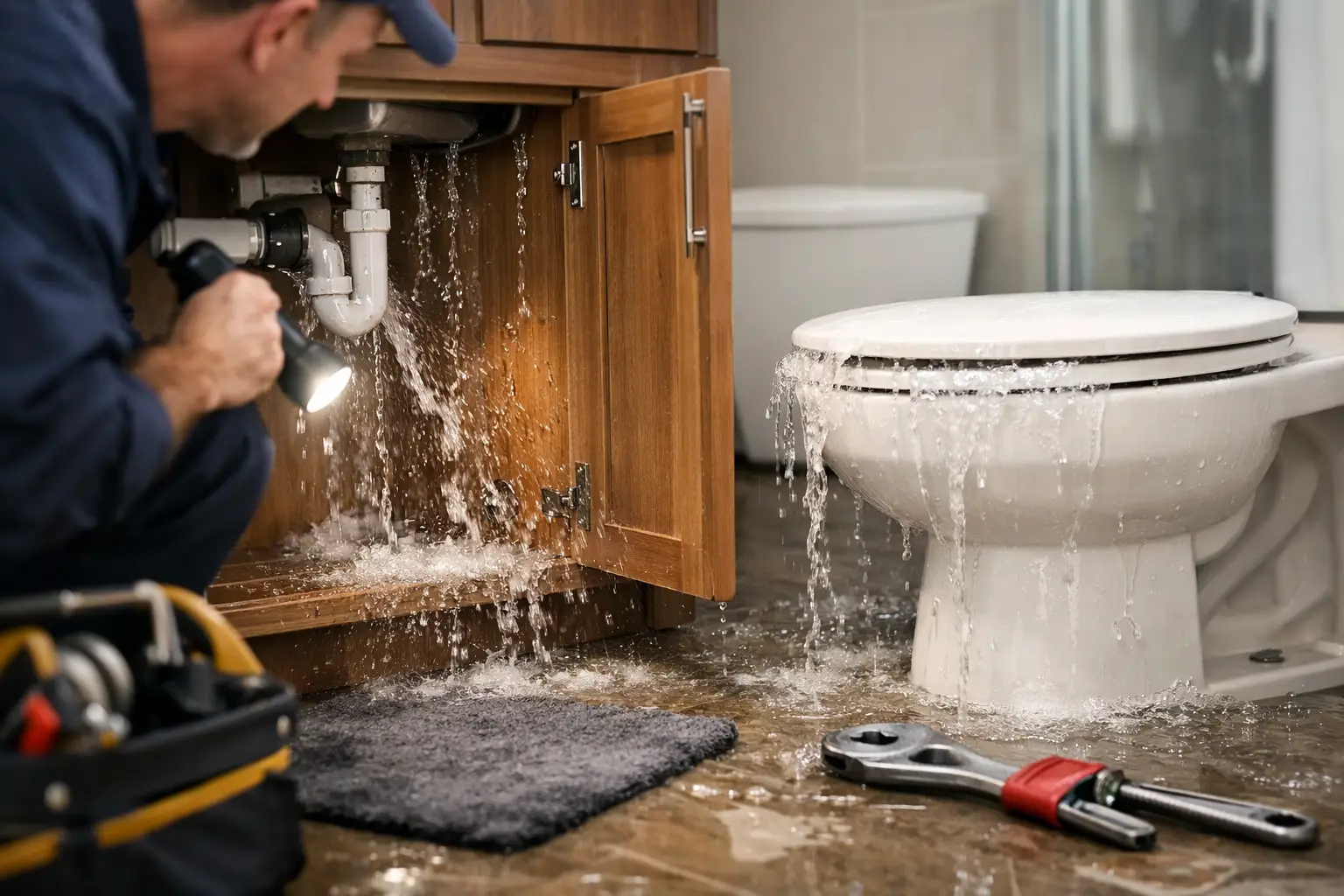
If a pipe has burst or a leak is actively soaking floors, walls, ceilings, or equipment, that is an emergency. Water moves fast, and damage spreads behind surfaces long before it is visible. Drywall weakens, flooring buckles, insulation becomes saturated, and mold can start to develop if moisture is left in place.
In cold snaps, burst pipes are especially common. In older homes and commercial buildings, failing pipe connections can also let go without much warning. If shutting off the nearest valve does not stop the leak, turn off the main water supply and call for immediate service.
Sewer backups and sewage odors
When wastewater is coming back up through drains, tubs, or toilets, you are dealing with more than a clog. Sewage backup creates a sanitation issue that can affect occupants quickly. It can also point to a deeper blockage in the main line, which means repeated use of sinks, toilets, or washing machines may make the problem worse.
Even if you do not see standing sewage yet, a strong sewer odor inside the building should not be ignored. In some cases, it signals a drainage or venting issue that needs urgent diagnosis.
No water service inside the building
If your property suddenly has no running water and the issue is limited to your building, that can absolutely be an emergency. For a homeowner, it can mean you cannot cook, clean, flush toilets, or maintain basic sanitation. For a business, especially a restaurant, office, healthcare facility, or multi-tenant property, lack of water can bring operations to a stop.
That said, it depends on the cause. If a municipality has a known water outage, that is not a plumbing emergency in the same way. But if the problem is inside your plumbing system, a failed valve, pressure issue, or pipe break needs prompt attention.
Overflowing toilets that cannot be stopped
One overflowing toilet may not sound dramatic, but if it cannot be contained or if it is the only functioning toilet in the home or commercial space, it becomes urgent quickly. If multiple fixtures are backing up at once, the issue may be in the main sewer line rather than the toilet itself.
That distinction matters. A single toilet clog might be manageable. A system-wide backup usually is not.
Water heater leaks or complete failure
A leaking water heater deserves fast service, especially if water is pooling around the base or the tank itself appears to be failing. A tank rupture can release a surprising amount of water in a short time. In commercial settings or larger households, loss of hot water may also affect daily operations and sanitation.
Not every hot water issue is an emergency. If the water heater stops producing enough hot water but there is no leaking, sparking, gas smell, or flooding risk, it may be urgent without being after-hours urgent. The exception is when vulnerable occupants, healthcare needs, or business requirements make hot water essential.
Gas line issues tied to plumbing equipment
Many people do not immediately connect gas line concerns with plumbing service, but licensed plumbing companies often handle gas piping for water heaters, boilers, and other equipment. If you smell gas, hear hissing near a line, or suspect a gas leak, treat it as an emergency.
Leave the area, avoid using switches or flames, and follow utility safety guidance before calling for professional help. Safety comes first.
When it may be urgent, but not an emergency
Not every plumbing issue needs a middle-of-the-night call. A dripping faucet, a slow drain in one sink, low water pressure at one fixture, or a toilet that runs occasionally is frustrating, but it can usually wait for a scheduled appointment.
The gray area is when a smaller issue starts affecting more of the property. A slow drain that turns into standing water in multiple fixtures may point to a larger blockage. A minor leak that becomes a ceiling stain is no longer minor. Plumbing problems do not always stay in the category where they start.
How to judge the situation in real time
Ask four practical questions
If you are unsure what is considered a plumbing emergency in your situation, ask yourself four things. Is there active water damage happening right now? Is health or safety at risk? Have you lost an essential plumbing function? Will waiting likely make the repair much more expensive?
If the answer is yes to any of those, it is smart to call right away.
Residential and commercial emergencies are not always the same
In a home, one out-of-service sink may be manageable for a day. In a business, one blocked restroom can create a customer issue, employee problem, or code concern. Property managers also need to think about tenant impact, common areas, and after-hours damage spreading between units.
That is why commercial plumbing emergencies often require faster response even when the visible issue seems limited.
What to do before the plumber arrives
Your first move is damage control. Shut off the water if a leak is active. If the problem is isolated to a fixture, use the local shutoff valve. If not, shut off the main. For a water heater issue, turning off the water supply and power source can help reduce risk, but only if you know how to do it safely.
Do not use affected drains or toilets if you suspect a sewer line issue. Move valuables, rugs, inventory, or electronics away from standing water. Take photos if insurance documentation may be needed later. Then call a qualified plumber who offers emergency service.
If you are in the Midlands and need a trusted local team, Kay Plumbing, Heating & Cooling serves homeowners and commercial properties with emergency repair support and upfront guidance.
Why fast action matters
The biggest mistake people make is waiting too long because they hope the issue will settle down on its own. Plumbing emergencies rarely improve without repair. More often, they spread from one room to another, from one fixture to the whole system, or from inconvenience to property damage.
Fast response protects more than pipes. It protects drywall, flooring, electrical components, inventory, equipment, and the day-to-day function of your home or business. It also gives a technician a better chance of fixing the problem before secondary damage drives up the total cost.
Knowing what is considered a plumbing emergency helps you make a clear decision under pressure. If the issue puts safety, sanitation, property, or essential service at risk, do not wait for it to get worse. A quick call now is often the difference between a controlled repair and a much bigger restoration job later.