Water Heater Repair: Signs You Shouldn’t Wait
A cold shower gets your attention fast, but most water heater problems start earlier and quieter than that. A popping tank, rusty water, a slow drop in temperature, or a small puddle near the unit are all signs that water heater repair may already be overdue. The sooner you catch the issue, the better your chances of avoiding water damage, safety concerns, and a full system failure.
For homeowners and property managers, the challenge is knowing what counts as a minor issue and what needs immediate service. Some problems point to a worn part that can be replaced quickly. Others suggest the tank itself is failing, or that the unit is creating a bigger risk to the building. Knowing the difference helps you act with confidence.
When water heater repair should move to the top of your list
Not every water heater issue looks dramatic at first. In many cases, the system keeps running while performance slowly gets worse. That is why small changes matter.
If your hot water runs out faster than usual, the heating element or burner may not be doing its job. If the water temperature swings from hot to cold without warning, there could be a thermostat problem, sediment buildup, or a component starting to fail. Strange noises also deserve attention. Rumbling, cracking, or popping often means sediment has collected inside the tank and is forcing the unit to work harder than it should.
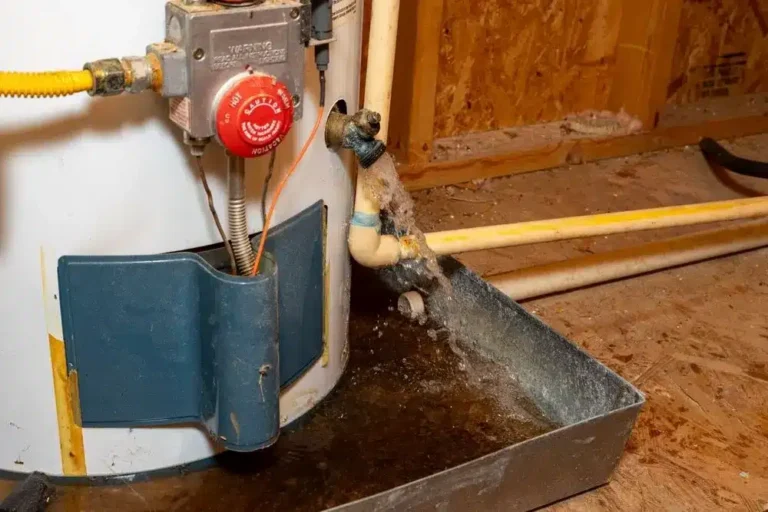
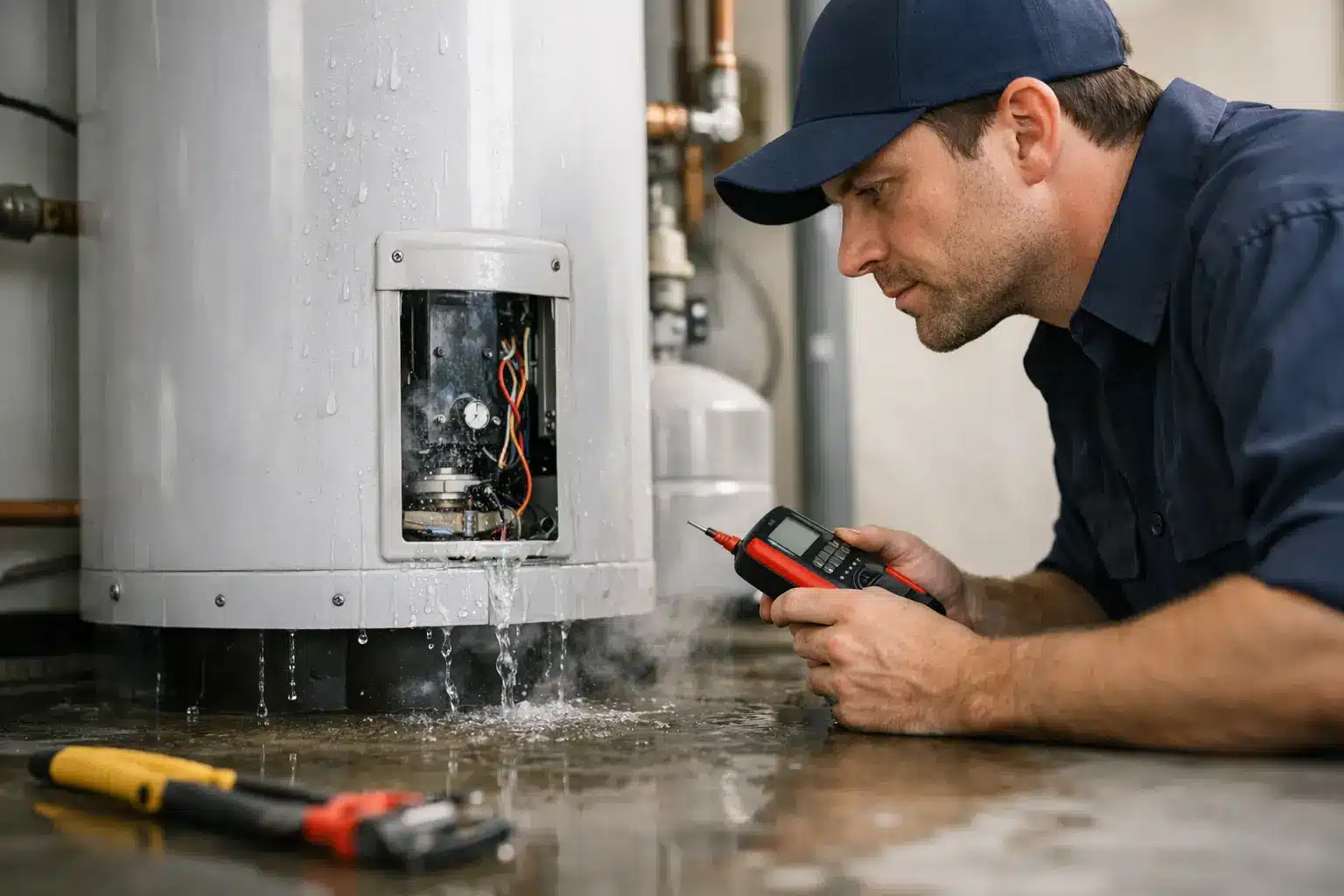
Leaks are a different category. Even a small drip should be taken seriously because water heaters sit near flooring, walls, and mechanical systems that can be damaged quickly. Sometimes the leak comes from a loose connection or pressure relief valve. Sometimes it comes from the tank itself. That distinction matters, because a leaking tank usually points to a replacement conversation rather than a simple repair.
Discolored hot water is another warning sign people tend to ignore too long. Brown or rusty water may mean corrosion inside the tank or deterioration in nearby piping. If the smell is off, especially if the water has a sulfur-like odor, bacteria inside the tank may be part of the problem. These are not issues to put on hold.
Common causes behind water heater problems
Water heaters work hard every day, and the same few trouble spots tend to cause most service calls. Sediment is one of the biggest. Over time, minerals settle at the bottom of the tank and create a barrier between the burner or heating element and the water. That reduces efficiency, stresses the unit, and can shorten its service life.
Heating elements often fail in electric models, while gas units may run into burner or ignition issues. Thermostats can also drift out of calibration or stop responding altogether. If the system cannot read or regulate temperature correctly, you end up with inconsistent hot water or none at all.
The anode rod is another overlooked part. Its job is to attract corrosive elements in the water so the tank lining does not take the hit first. When the rod wears out, the tank becomes more vulnerable to rust. Replacing an anode rod at the right time can extend the life of the unit. Waiting too long can turn a repairable problem into a much larger one.
Pressure relief valves, dip tubes, and supply connections can also fail. Some of these issues are relatively straightforward. Others require careful diagnosis because the same symptom can come from several different causes. No hot water, for example, might mean a tripped breaker, a failed element, a gas supply issue, or a thermostat problem. Guessing usually wastes time.
Repair or replace? It depends on the condition of the unit
This is one of the most common questions, and the honest answer is that it depends on age, condition, and the source of the problem. A water heater that is otherwise in good shape may only need a targeted repair. A newer unit with a bad element, faulty thermostat, or leaking valve is often worth fixing.
An older tank with visible corrosion, repeated breakdowns, or signs of internal failure is a different story. Once the tank itself starts to deteriorate, repairs become limited. If the metal is compromised, there is no lasting fix for that.
The type of property matters too. In a home, a short interruption may be disruptive but manageable. In a commercial setting, hot water downtime can affect operations, sanitation, and customer experience. That changes how quickly you need a reliable solution.
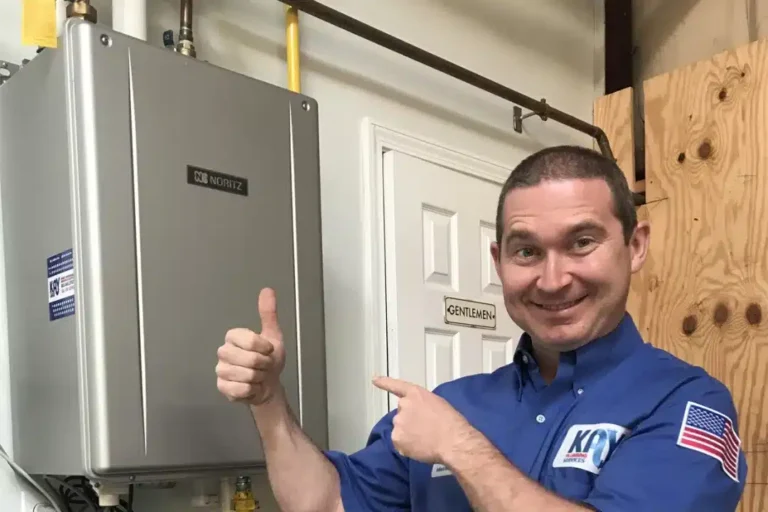
Tankless systems bring their own set of repair questions. They can be excellent systems, but when they scale up, lose ignition, or develop sensor issues, proper service matters. They are not immune to wear. They simply fail differently than traditional tank units.
What you can check before calling for service
There are a few basic things worth checking, as long as you do it safely. If you have an electric water heater, confirm the breaker has not tripped. If you have a gas unit, check whether the pilot is out or whether the system is displaying an error code, if your model has that feature.
Look around the unit for obvious water at fittings or around the base. Pay attention to how much water is present. A little moisture near a pipe connection is not the same as active leaking from the tank. Also check whether the issue affects all hot water fixtures or only one area of the building. Sometimes a fixture-specific problem gets mistaken for a water heater issue.
That said, there is a limit to safe troubleshooting. Water heaters involve electricity, gas, heat, pressure, and in some cases combustion venting. If you smell gas, see active leaking, hear alarming noises, or have no hot water with no obvious explanation, it is time to bring in a certified professional.
Why professional water heater repair matters
Water heaters are one of those systems that look simpler than they are. Replacing a part is only one piece of the job. The real work is identifying the actual cause, checking for related damage, and making sure the system is safe to operate when the repair is complete.
A professional technician can evaluate the heating source, temperature controls, venting, tank condition, pressure components, and water connections as a complete system. That matters because a symptom in one area can be triggered by a hidden issue somewhere else. Fixing only the visible problem may get the hot water back for a few days, but it does not solve the root cause.
There is also the safety side. Gas water heaters must vent properly. Pressure relief devices must function correctly. Electrical connections must be handled to code. These are not details to overlook, especially in occupied homes, rental properties, restaurants, offices, or multi-use buildings.
For customers in Lexington and nearby communities, working with an established local team also means help arrives with a clear understanding of the area’s service needs and building types. That experience can make diagnosis faster and repairs more dependable.
How to reduce future repairs
No water heater lasts forever, but routine attention can prevent a lot of avoidable trouble. Flushing sediment from a tank helps reduce strain on the system. Inspecting the anode rod can catch corrosion risk before it becomes tank damage. Checking valves, connections, and temperature settings can also keep small issues from turning into emergency calls.
Maintenance matters even more in properties with heavy hot water demand. A family home with multiple bathrooms, a rental property with tenant turnover, or a commercial building with daily hot water use all place different demands on the equipment. The harder the unit works, the less sense it makes to ignore maintenance.
This is also where it helps to have a provider that understands the bigger picture. A water heater problem can sometimes connect to plumbing conditions elsewhere in the building, water quality concerns, or related mechanical system issues. Companies like Kay Plumbing, Heating & Cooling are built to look at the full system, not just the tank in isolation.
Don’t wait for a complete loss of hot water
The best time to schedule water heater repair is usually before the system stops working entirely. Strange sounds, poor performance, rusty water, leaks, and inconsistent temperature are all signs that the unit is asking for attention. Some repairs are straightforward when caught early. The same issue can become a much bigger disruption when left alone.
If your water heater is showing warning signs, trust what you are seeing. Fast, professional service protects your comfort, your property, and your peace of mind – and that is always easier than dealing with a failure after the fact.