When You Need 24 Hour HVAC Services Fast
A dead AC at 10 p.m. in July or a furnace failure before sunrise is not a problem you can pencil in for later. When comfort, safety, and daily operations are on the line, 24 hour hvac services give homeowners and businesses a way to respond before a bad situation gets worse.
Not every heating or cooling issue is a true emergency, but many are. The key is knowing the difference. If your system stops running during extreme weather, starts making sharp or unusual noises, gives off a burning smell, leaks around the unit, or blows air that is far hotter or colder than it should be, waiting can put added stress on equipment and people. For families with young children, older adults, or anyone with health concerns, the need for a fast response becomes even more urgent.
What 24 Hour HVAC Services Actually Cover
Around-the-clock HVAC service is not just about answering the phone after business hours. It means a trained technician is available to diagnose urgent heating and cooling problems, stabilize the system, and restore function as quickly as possible.
That may include air conditioner breakdowns, furnace failures, heat pump issues, thermostat malfunctions, airflow problems, electrical concerns, frozen coils, blower motor trouble, or ventilation problems affecting indoor comfort. In commercial settings, it can also mean protecting tenants, employees, inventory, server rooms, or critical operations that depend on climate control.
The best emergency response is practical and focused. First, identify the problem. Next, determine whether the system can be safely repaired right away or whether a temporary measure is needed until a larger repair can be completed. A dependable provider does not create confusion in an already stressful moment. They explain what is happening, what needs immediate attention, and what comes next.
When to Call for 24 Hour HVAC Services
Some problems can wait until morning. Others should not.
If your AC quits during a mild evening and the indoor temperature is still manageable, scheduling next-day service may be reasonable. If your system is still running but not cooling as effectively as usual, that is often urgent but not always an overnight emergency. The same goes for a furnace that is cycling more often than normal but still producing heat.
The situation changes when the failure affects safety, health, or the building itself. A furnace that will not start during a cold snap, an AC system that fails during extreme heat, or equipment that trips breakers repeatedly should be addressed right away. Burning odors, buzzing from electrical components, smoke, gas-related concerns around heating equipment, or a complete shutdown in a commercial property are all strong signs to call now rather than later.
There is also the issue of damage spreading. A frozen evaporator coil, clogged condensate drain, or leaking HVAC component may begin as a comfort issue and turn into water damage, mold risk, or additional equipment failure. What looks minor at night can become much bigger by morning.
Why Fast HVAC Response Matters
HVAC systems rarely fail at a convenient time. They tend to show their weaknesses when demand is highest, which means late at night, over a weekend, or during peak seasonal temperatures. That is exactly when a quick response matters most.
For homeowners, the immediate concern is usually comfort, but there is often more at stake. Poor temperature control can affect sleep, trigger respiratory issues, and create unsafe indoor conditions. If your home relies on one central system, there may be no backup.
For commercial properties, downtime can ripple through the entire building. Offices become unusable, retail spaces lose customer comfort, restaurants face kitchen and dining area challenges, and facilities managers may need to answer to tenants or ownership groups fast. Reliable 24 hour hvac services help limit disruption and protect continuity.
Fast service also helps prevent guesswork. Many people try resetting breakers, adjusting thermostats, or restarting equipment multiple times before calling. Sometimes that is fine. Sometimes it masks a deeper issue or puts more strain on the system. Getting a certified technician on site can shorten the problem, reduce uncertainty, and prevent avoidable damage.
What to Expect During an Emergency HVAC Call
A quality emergency visit should feel organized, not chaotic. The process usually starts with a few direct questions about the symptoms, the type of equipment on site, and whether there are any immediate safety concerns.
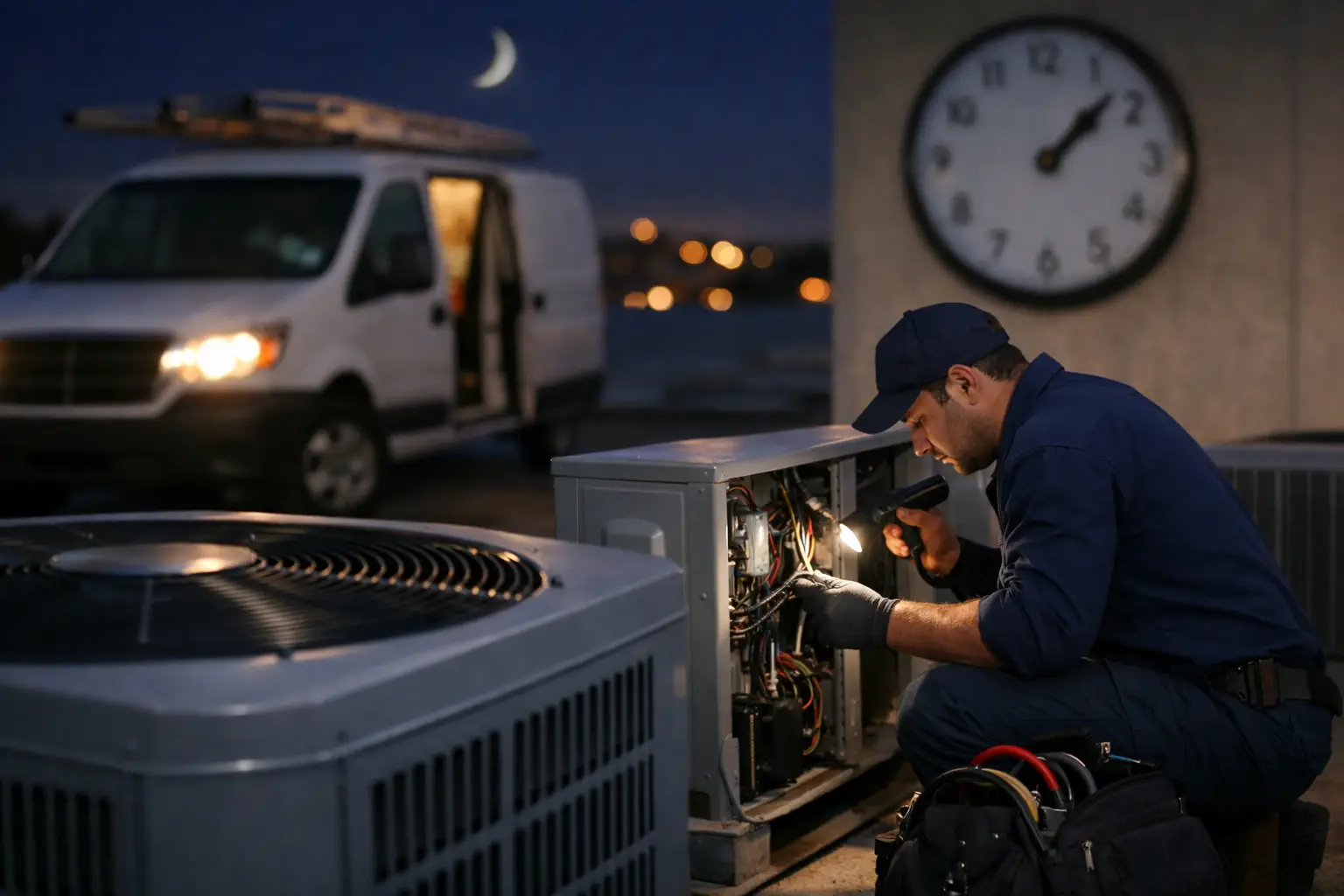
Once the technician arrives, the first priority is safe diagnosis. That may involve checking power supply, controls, motors, capacitors, refrigerant-related issues, airflow restrictions, ignition components, drain lines, or communication problems between the thermostat and the system. In commercial environments, it may also involve rooftop units, zoning controls, or building automation interfaces.
From there, the technician should explain the issue clearly. Some repairs can be completed on the spot. Others depend on the condition and age of the equipment, the exact failed component, and whether the problem has caused secondary damage. That is where experience matters. The goal is not only to restore operation, but to do it in a way that is safe and dependable.
The strongest service providers also look beyond the immediate fix. If a failed part is tied to poor maintenance, restricted airflow, or a system that has been struggling for weeks, you should know that. Emergency service is about restoring comfort now, but it should also give you a clearer picture of what your system needs next.
Choosing a Provider for 24 Hour HVAC Services
Not all after-hours service is equal. Some companies technically offer emergency calls but have limited response capacity, narrow repair capabilities, or little experience beyond basic residential work. If you are trusting someone with your home or commercial property in the middle of the night, you want more than availability. You want depth.
Look for a company with certified technicians, a broad range of heating and cooling expertise, and a reputation for showing up prepared. That matters even more if your property has multiple systems, smart controls, ventilation concerns, or mixed residential and commercial demands.
It also helps to choose a provider that can support the full life of the system, not just the emergency. When one company can handle repairs, maintenance, replacements, indoor air quality concerns, and related mechanical issues, it is easier to get consistent recommendations and long-term support. That is one reason many property owners prefer an established local team such as Kay Plumbing, Heating & Cooling rather than piecing together help from different vendors.
How Maintenance Reduces Emergency Calls
Even the best 24 hour hvac services are not a substitute for preventive care. Emergency availability is essential, but avoiding the emergency in the first place is even better.
Many after-hours failures start with warning signs that were easy to miss or easy to postpone. Dirty filters restrict airflow. Unchecked electrical components wear down. Drain lines clog. Refrigerant problems strain cooling performance. Small issues build until the system finally fails under heavy demand.
Routine maintenance gives technicians a chance to catch those problems early. It also helps the system operate more efficiently, maintain better airflow, and handle extreme weather with less stress. That does not mean maintenance prevents every breakdown. Equipment can still fail unexpectedly. But it can reduce the odds of a midnight call and improve the chances that your HVAC system will perform when you need it most.
This matters for commercial properties just as much as homes. In facilities with heavy occupancy, sensitive equipment, or customer-facing spaces, preventive service is part of protecting operations. Waiting until there is a shutdown is rarely the best plan.
A Smart Response Starts With Knowing When to Act
The most common mistake people make with HVAC emergencies is waiting too long because they hope the system will recover on its own. Sometimes it does. Often it does not. And when the signs point to a real problem, delay can make the repair more complicated than it needed to be.
A better approach is simple. Pay attention to unusual behavior, know which symptoms suggest a true emergency, and work with a provider that can respond with confidence any time of day. Whether you are managing a family home or keeping a commercial building running, dependable 24 hour hvac services are not just about convenience. They are about protecting comfort, safety, and peace of mind when the system decides to quit on its own schedule.
When your heating or cooling system fails after hours, the right call can make the night a lot shorter.

