Non-Invasive Slab Leak Detection & Concrete Foundation Pipe Repair
How Plumbers Find and Repair Hidden Foundation Leaks
Slab leak detection uses special tools to find a leaking pipe under a concrete foundation. It avoids large, trial-and-error demolition. By finding the leak source first, a Master Plumber can suggest a targeted repair, pipe reroute, or repiping. This helps limit damage to floors and living areas.
A water leak beneath a concrete foundation can remain hidden long after the plumbing problem begins. Unlike a dripping faucet or exposed pipe, a slab leak may release water under the floor. It can leak inside the foundation or into nearby soil. It may do so without leaving an obvious puddle.
That is why people sometimes describe slab leaks as an invisible threat. Homeowners may first notice a higher water bill, a warm spot on the floor, unexplained moisture, or running-water sounds.
The good news is that finding a hidden foundation leak does not always require tearing up large sections of flooring. Modern slab leak detection helps trained plumbers check the system, find the affected line, and pinpoint the source. Then they recommend a repair.
Kay Plumbing, Heating & Cooling provides professional leak detection for homeowners in Lexington, Columbia, and surrounding Midlands communities. Its licensed plumbers use advanced tools to find hidden leaks. They avoid unnecessary damage to walls, floors, and finished living spaces.
What Is a Slab Leak?
A slab leak is a leak in a water line located beneath or within a home’s concrete foundation.
Many slab-foundation homes have water supply lines routed below the concrete. If one of those pipes develops a crack, pinhole, failed connection, or damaged section, water can escape underneath the home.
A slab leak may involve:
Because the pipe is concealed, the visible symptom may appear some distance away from the actual leak.
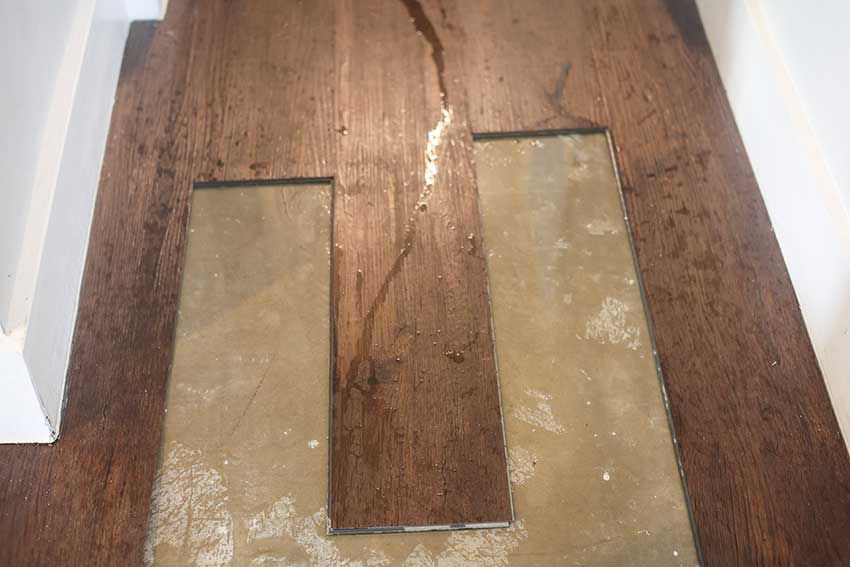
Water can travel along pipes, flooring materials, cracks, and foundation surfaces. A wet spot in one room does not necessarily mean the damaged pipe is directly below it.
Why Slab Leaks Can Be Difficult to Find
Visible plumbing leaks often reveal their source. Slab leaks usually do not. Concrete, flooring, cabinets, walls, and soil can all conceal the pipe. Escaping water may also follow the path of least resistance before becoming noticeable indoors.
This creates two important challenges:
- The plumbing professional must confirm that a leak exists.
- The affected line and likely leak location must be narrowed down before repair work begins.
Without accurate diagnostics, a contractor could open the wrong section of flooring or remove more material than necessary.
Professional slab leak detection reduces that guesswork.
Traditional Guesswork vs. Modern Leak Detection
Traditional Trial-and-Error Approach
Opens flooring before narrowing down the source
May disturb a larger area than necessary
Relies heavily on visible symptoms
Can increase flooring and restoration work
May treat the wettest area as the leak source
Repair planning begins with limited information
Modern Non-Invasive Leak Detection
Diagnoses the plumbing system before access work begins
Focuses on the most likely leak location
Uses pressure, sound, temperature, and moisture clues
Helps minimize unnecessary property damage
Accounts for water traveling away from the damaged pipe
Accounts for water traveling away from the damaged pipe
No method can guarantee that a repair will require zero access. However, accurate detection can substantially reduce unnecessary cutting and help the plumber choose a more controlled solution.
Warning Signs of a Hidden Slab Leak
A single symptom does not always confirm a foundation leak. However, several warning signs occurring together should prompt a professional plumbing inspection.
An Unexplained Increase in the Water Bill
A hidden leak can waste water around the clock, even when no faucets or appliances are operating.
Homeowners should compare recent water bills with the same period from previous years. A noticeable increase without a change in household use may indicate a concealed plumbing problem.
The Water Meter Moves When Everything Is Off
A water meter can provide an initial clue. After turning off faucets, toilets, appliances, irrigation, and other water-using equipment, homeowners can observe the meter. Continued movement may indicate that water is still flowing somewhere in the plumbing system. This check can suggest a leak, but it does not identify the location.
Warm Areas on the Floor
A warm patch on tile, wood, laminate, or another floor covering may indicate a leaking hot-water line beneath the slab.
Plumbing does not cause every warm floor. Sun exposure, ductwork, appliances, and electrical equipment can also affect surface temperature. A plumber must evaluate the full set of symptoms.
Damp Flooring or Discoloration
Moisture may appear as:
These signs need quick attention. Persistent moisture can damage finishes and materials before the leak is fully visible.
The Sound of Running Water
Homeowners may hear hissing, dripping, or flowing water when fixtures and appliances are turned off.
The sound may be most noticeable at night or in a quiet room. Although it can indicate a hidden leak, professionals need to diagnose the source.
Reduced Water Pressure
A leaking supply line can contribute to lower or inconsistent water pressure.
Pressure changes may have other causes, including fixture problems, failing valves, mineral buildup, or municipal supply conditions. A plumbing evaluation helps distinguish among these possibilities.
Cracks or Moisture Near the Foundation
Moisture near the slab edge, unexplained wet spots near the home, or new foundation and flooring changes may signal an underground leak.
These conditions can also come from drainage, irrigation, roofing, or groundwater problems. Confirm the source instead of assuming it.
Homeowner Checklist: What to Do Before Calling
Homeowners who suspect a slab leak can gather useful information without opening floors or attempting a repair.
These observations can help the plumber understand the symptoms, but they do not replace diagnostic testing.
How Non-Invasive Slab Leak Detection Works
Non-invasive does not always mean that no material will ever need to be opened. It means the investigation aims to locate the problem before excavation or access work begins.
The diagnostic process may include several steps.
1. Plumbing-System Evaluation
The plumber begins by reviewing the symptoms and inspecting accessible plumbing components.
This may include checking:
The goal is to rule out accessible leaks before concluding that the problem is beneath the slab.
2. Pressure Testing and Line Isolation
Pressure testing can help determine whether a supply line is losing pressure.
A professional may divide the plumbing system into sections to isolate the affected line. Narrowing the problem to a particular hot- or cold-water branch reduces the search area.
3. Electronic or Acoustic Listening
Escaping pressurized water can produce sound or vibration.
Special listening tools can help a trained technician trace the signals through the floor. They can also find where the signals are strongest. Background noise, flooring type, pipe depth, and leak size can affect the results, so interpretation requires experience.
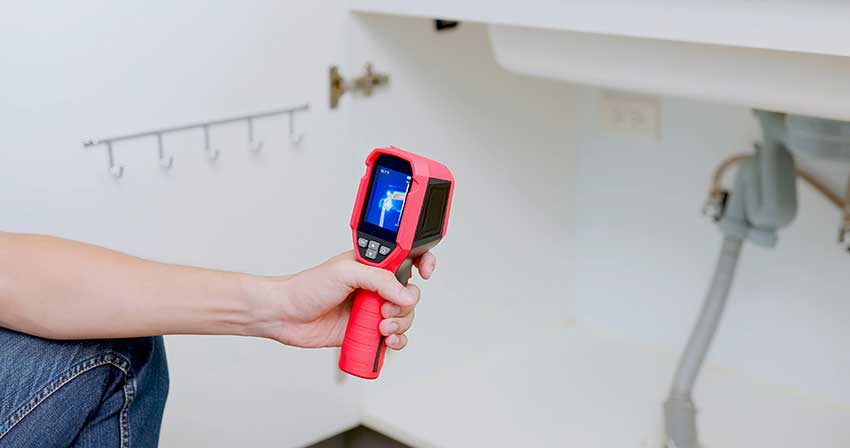
A plumber uses a thermal imaging camera to locate a slab leak beneath the bathroom floor.
4. Thermal and Moisture Evaluation
A leaking hot-water line may create a temperature difference across the floor.
Thermal imaging or surface-temperature measurements can help identify unusual heat patterns. Moisture meters may also help determine whether flooring or nearby materials contain elevated moisture.
These tools provide clues, and technicians generally use them with other diagnostic findings rather than as stand-alone proof.
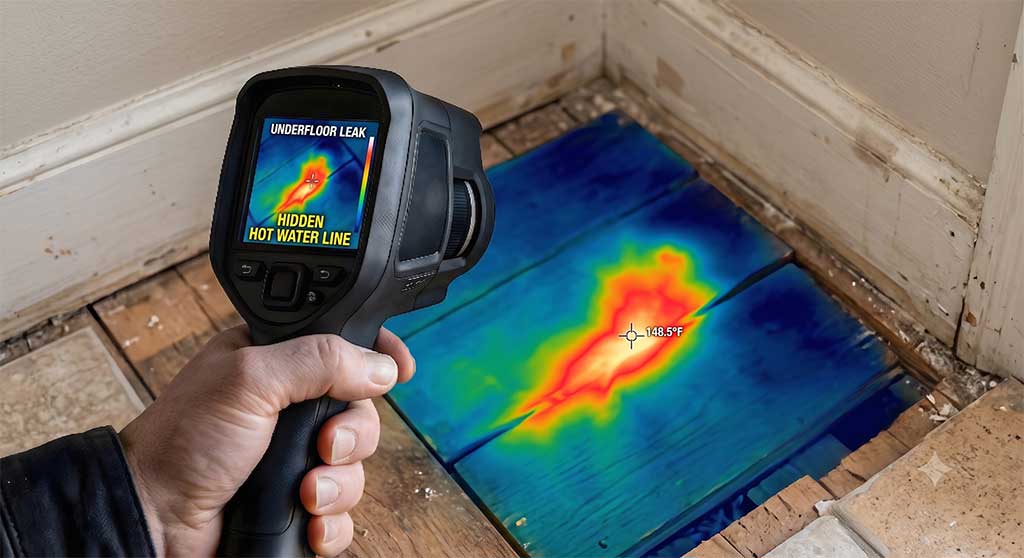
Thermal imaging camera reveals the location of a slab leak hidden beneath the flooring.
5. Pipe and Route Location
Understanding where plumbing lines run under the foundation helps the plumber compare the suspected leak area with the system layout.
Electronic line locating or other tracing methods may be used when appropriate.
6. Confirmation and Repair Planning
The plumber combines the available evidence to estimate the leak location and determine the most practical repair strategy.
Modern detection delivers this key benefit: diagnostics guide the repair plan instead of random demolition.
What Happens After You Locate the Leak?
Finding the leak is only the first step.
The plumber must also assess:
A good recommendation should address the real plumbing problem, not just the quickest temporary fix to stop water.
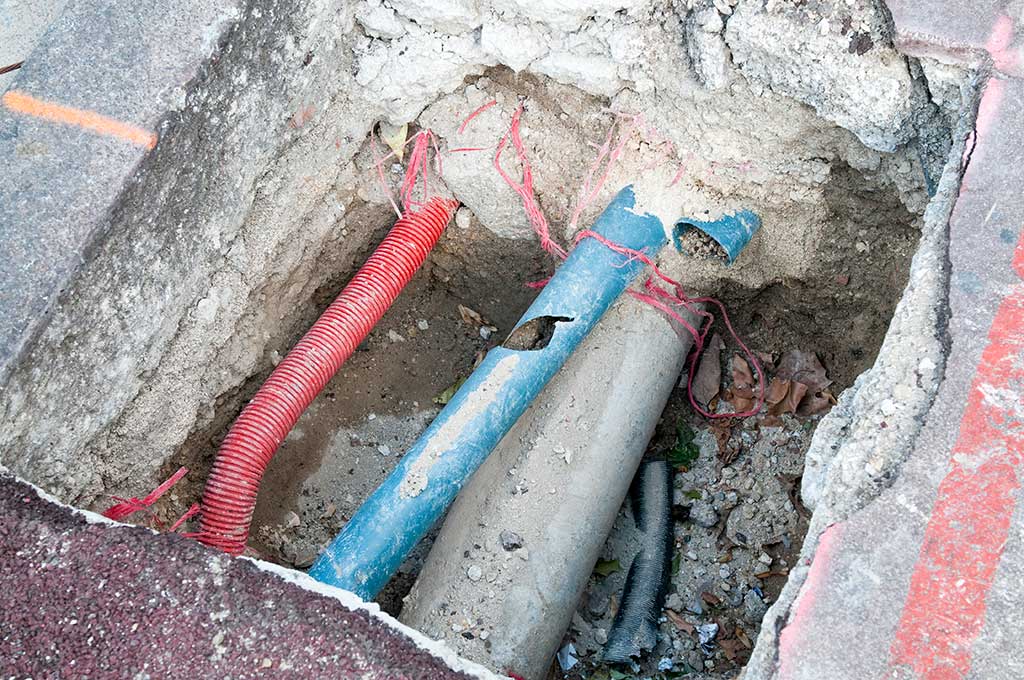
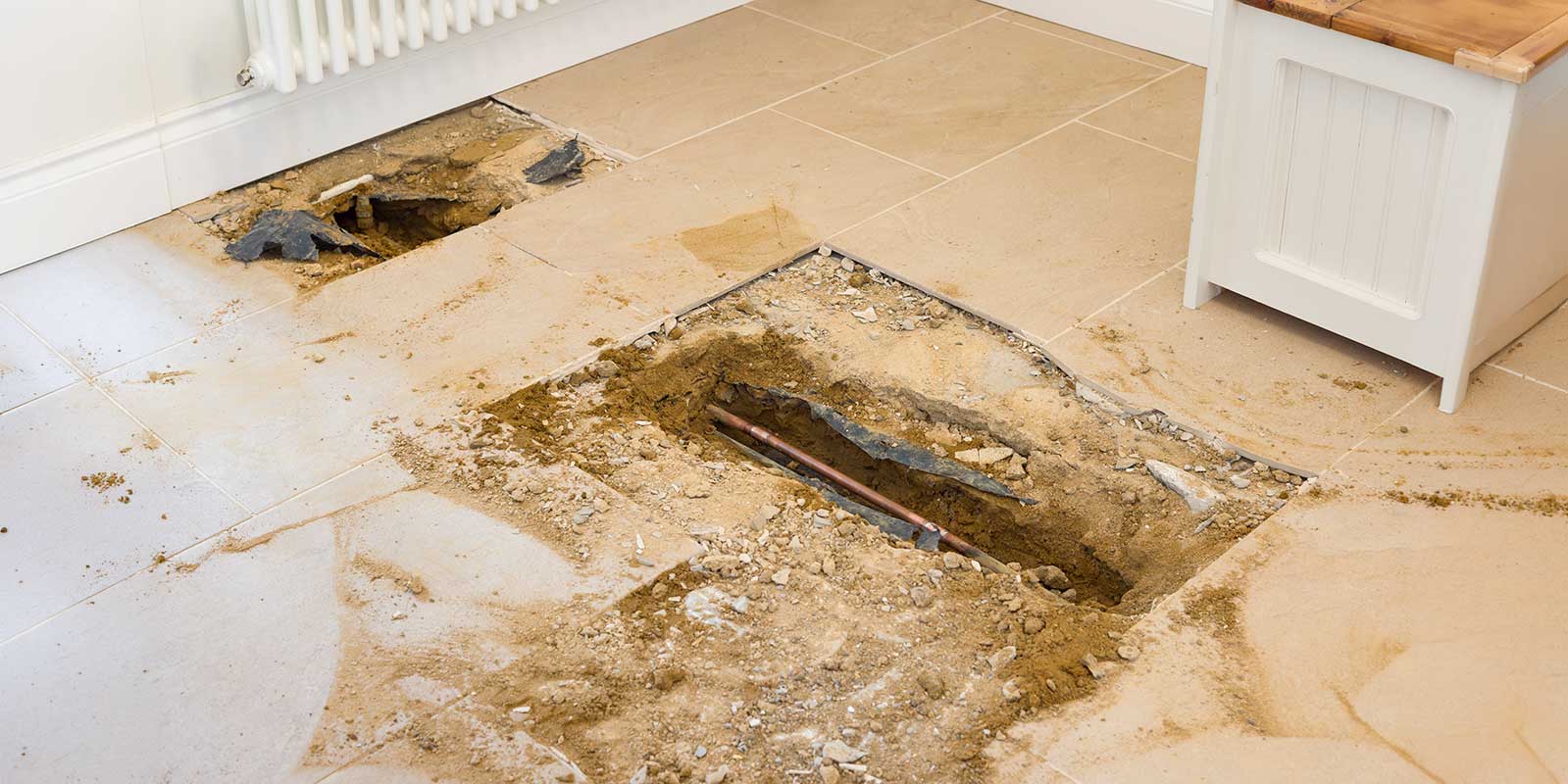
A small section of concrete is removed to expose the damaged pipe causing the slab leak
Concrete Foundation Pipe Repair Options
The right repair depends on the pipe, location, system condition, and damage extent.
Targeted Slab Access and Pipe Repair
When the plumber finds the leak and the surrounding pipe is in good shape, they may recommend opening part of the floor.
The repair may also require breaking through a controlled section of concrete.
Workers expose, repair, and test the damaged pipe section before they close the access area.
This approach may be appropriate when:
Although technicians need access, accurate slab leak detection helps them keep the opening as focused as practical.
Pipe Rerouting
In some homes, pipe rerouting through a wall, ceiling, or attic may be preferable to opening the foundation.
Rerouting bypasses the damaged underground section and establishes a new path for the water supply. This option may reduce the need for direct slab access. It can also remove a vulnerable pipe section from under the foundation.
Whether rerouting is possible depends on the home’s layout, the affected line, and the condition of the rest of the plumbing system.
Partial Repiping
If several lines are wearing out, or the home has had repeated leaks, fixing one spot may not solve the bigger plumbing issue. Partial repiping replaces an affected group of lines while leaving serviceable sections in place.
Whole-Home Repiping
A home may need whole-home repiping when its plumbing has widespread damage, frequent slab leaks, or corrosion. It may also help when the property has low water pressure or a long history of repairs.
Repiping is not automatically necessary after one slab leak. A Master Plumber should determine whether the failure stands alone or forms part of a larger pattern.
Repair vs. Reroute: Which Option Is Better?
|
Consideration |
Targeted Slab Leak Repair |
Pipe Rerouting |
|---|---|---|
|
Best suited for |
A clearly located, isolated pipe failure |
A difficult-to-access or repeatedly failing underground line |
|
Foundation access |
Usually requires controlled access through the slab |
May avoid cutting through the concrete foundation |
|
Main disruption |
Concentrated around the repair location |
Openings may be needed along the new pipe route |
|
Existing underground line |
Repaired and returned to service |
Bypassed or abandoned |
|
Effect on vulnerable piping |
Keeps the existing pipe route in place |
Removes the damaged section from active service |
|
Long-term value |
Depends on the condition of nearby underground piping |
May reduce future risk from the bypassed line |
|
Most important decision factor |
Localized damage with otherwise serviceable plumbing |
Access problems, recurring failures, or broader pipe concerns |
Why Delaying a Slab Leak Can Increase Damage
A hidden leak rarely resolves on its own.
Continued water loss can contribute to:
A plumbing leak is not the only possible cause of foundation or flooring changes. Homeowners should avoid assuming that plumbing is responsible for every crack or moisture issue. Prompt diagnosis helps identify the actual source before the damage spreads.
Local Considerations for Midlands Homeowners
Homes in Lexington, Columbia, and surrounding Midlands communities include a mix of slab foundations, crawlspaces, older plumbing systems, renovated properties, and newer construction.
The region’s red clay soil can expand as it absorbs moisture and contract during extended dry periods. Over time, this soil movement may shift conditions around a foundation and add stress to underground plumbing. Soil movement does not cause every slab leak, but it can be an important local factor. A plumber should consider it during an inspection.
Other Midlands conditions can also make hidden leaks more difficult to recognize:
A local plumber can tell the difference between plumbing, drainage, appliance, and environmental sources. They will not assume every damp spot is a slab leak.
Slab Leak Detection: Myth vs. Truth
Myth: Finding a slab leak always requires tearing up several rooms.
Truth: Modern diagnostics can often narrow the suspected location before opening any concrete. Some leaks still require direct access, but the goal is a targeted repair—not widespread demolition.
Myth: The wettest spot is always directly above the broken pipe.
Truth: Water can travel beneath flooring and along foundation surfaces. The visible moisture may appear away from the actual pipe failure.
Myth: Every slab leak requires whole-home repiping.
Truth: Some leaks can be repaired locally. People generally consider repiping or rerouting when pipe condition, access, or repeated failures make a broader solution more practical.
Field Report From the Shop
“When I investigate a suspected slab leak, I do not begin by cutting into the floor. I first confirm the plumbing system is losing water. I rule out easy-to-check fixtures and appliances. Then I narrow the problem to the affected line. The goal is to gather enough evidence to recommend the least disruptive repair. The repair should match the pipe’s condition.”
— Lead Commercial Technician, Kay Plumbing, Heating & Cooling
When to Call a Master Plumber
Homeowners should arrange professional slab leak detection when they notice:
A Master Plumber can evaluate the whole plumbing system. They can determine whether a hidden leak is present and explain repair options based on the pipe’s condition and location.
Protect the Home Before a Hidden Leak Spreads
A slab leak can remain invisible while wasting water and damaging flooring or other materials. Homeowners do not need to wait for water to rise through the floor before arranging an inspection.
Professional slab leak detection can confirm a plumbing leak. It can pinpoint the affected line. It also provides details needed to compare targeted repair, rerouting, or repiping options.
Homeowners may notice unexplained water use, warm spots on the floor, damp materials, or other warning signs.
When these warning signs appear, homeowners can contact Kay Plumbing, Heating & Cooling for professional leak detection in Lexington, Columbia, and nearby Midlands communities.