Lexington SC Emergency Plumber: What to Do Fast
A burst pipe at 2 a.m. does not give you time to compare options, research symptoms, or hope the problem settles down by morning. When you need a Lexington SC emergency plumber, the real priority is protecting your home or building from further damage while getting qualified help on the way.
Some plumbing problems can wait a day. Others cannot. The difference usually comes down to water damage, safety, sanitation, or the risk of a small failure turning into a much larger repair. Knowing how to respond in the first few minutes can make a major difference.
When to call a Lexington SC emergency plumber
Not every leak is an emergency, but plenty of situations are. If water is actively flowing where it should not be, if sewage is backing up, or if a plumbing failure is affecting safety or business operations, it is time to act quickly.
A burst pipe is the obvious example. Water can spread behind walls, under flooring, and into insulation faster than most people realize. The same is true for a failed water heater, an overflowing toilet that will not stop, or a broken supply line under a sink. In commercial spaces, even a smaller issue can become urgent if it shuts down restrooms, interrupts operations, or creates a hazard for customers or staff.
Sewer backups also belong in the emergency category. Foul odors, multiple drains backing up at once, or wastewater coming up through floor drains point to a serious problem that should not be left alone. This is not just inconvenient. It is a sanitation issue and can affect the safe use of the property.
Then there are gas line concerns. If you suspect a gas leak, leave the area and follow proper safety procedures immediately. That situation calls for urgent professional response, not trial and error.
What you should do before the plumber arrives
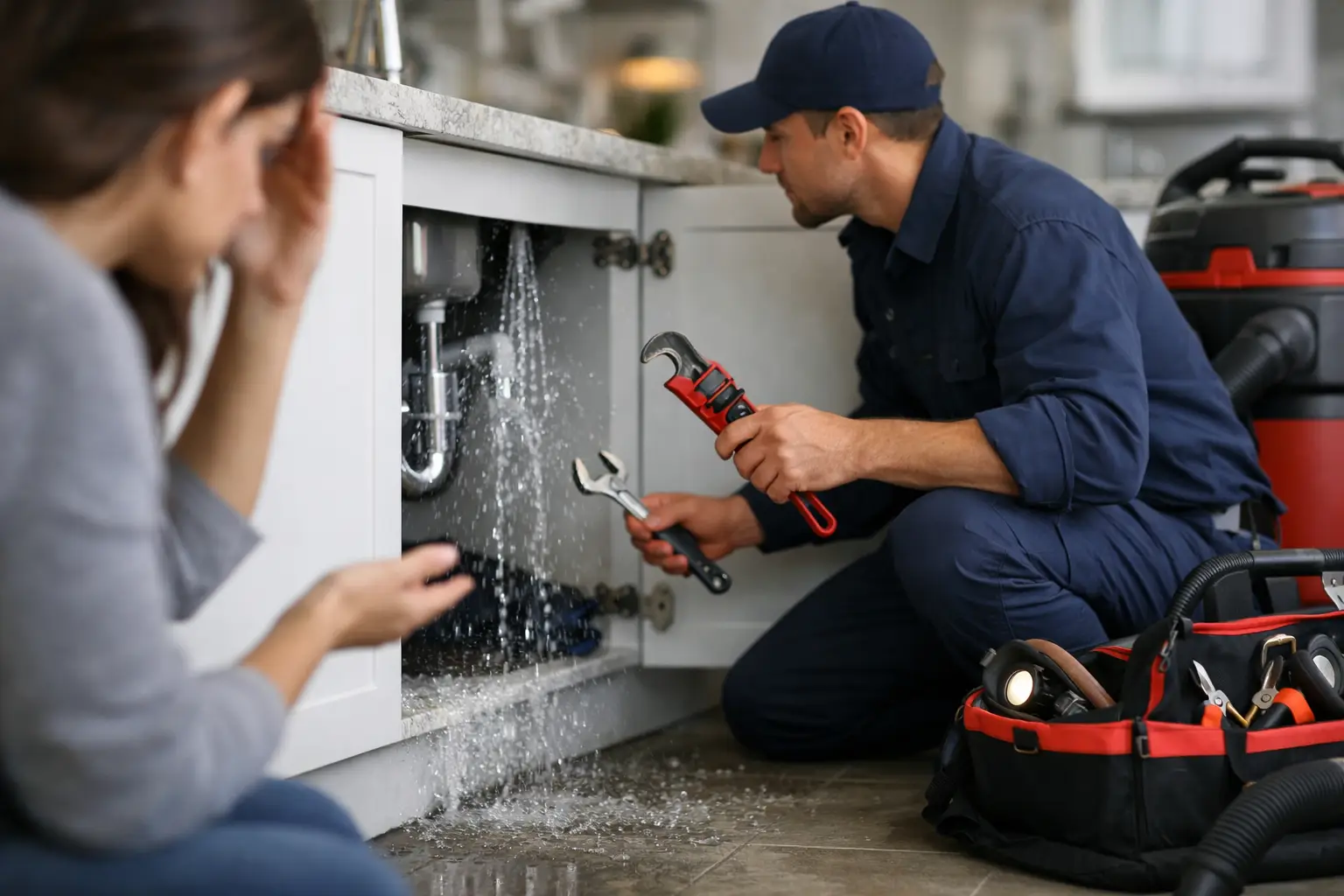
The first move is usually shutting off the water. If the problem is isolated to one fixture, such as a toilet or sink, the local shutoff valve may stop the immediate flow. If that does not work, or if the source is unclear, turn off the main water supply to the property.
If water is near electrical outlets, appliances, or power strips, do not step into standing water to investigate. Safety comes first. In some cases, the right decision is to cut power to the affected area if it can be done safely.
Next, try to contain the damage without getting in the way of the repair. Towels, buckets, and moving nearby belongings out of the wet area can help. For commercial properties, it may also mean blocking off part of the building to reduce slip hazards and keep people away from contaminated areas.
Take note of what happened before the failure started. Did the drain gurgle for days before backing up? Did water pressure suddenly drop? Was there recent work on the plumbing system? Those details help technicians diagnose the issue faster when they arrive.
Problems that feel minor until they are not
One of the biggest mistakes property owners make is waiting too long because the issue seems manageable. A slow leak behind a wall may not look urgent from the outside, but by the time staining appears on drywall or flooring begins to buckle, the damage is already spreading.
The same goes for clogged drains that keep returning. A single slow drain might not justify an emergency visit. But if several fixtures are draining poorly at once, or if flushing a toilet causes water to rise in a tub or shower, that points to a larger blockage in the main line. That kind of issue can escalate fast.
Water heater trouble also falls into the gray area. No hot water may be disruptive but not always an emergency. A leaking tank, popping sounds, rust-colored water, or signs of pressure problems are a different story. In homes and businesses alike, waiting on a failing water heater can lead to flooding and downtime.
Why emergency plumbing requires experienced diagnosis
In urgent situations, the visible problem is not always the actual cause. Water dripping from the ceiling may come from a pipe leak, but it could also be tied to a drain issue, an upstairs fixture overflow, or a water heater failure in another part of the building. Treating only the symptom wastes valuable time.
That is why experienced emergency service matters. A trained technician is not just there to stop the immediate mess. They are there to identify the source, assess whether other parts of the system are affected, and make a repair that restores safe function.
For homeowners, that means fewer repeat breakdowns and less uncertainty. For property managers and commercial operators, it means getting systems back online with minimal disruption and a clearer understanding of what happened.
Residential and commercial emergencies are not always the same
The basic risks are similar, but the response can look different depending on the property. In a home, the concern is often damage to flooring, drywall, furniture, and daily routines. In a commercial building, a plumbing emergency may affect compliance, customer access, employee safety, or critical operations.
A restaurant with a drain backup, an office with unusable restrooms, or a multi-unit property with a hidden leak all require quick, organized action. The right emergency plumber should be able to work in both settings with the same focus on safety, professionalism, and getting the problem under control.
That broad capability matters because plumbing issues do not always stay in one lane. A water problem may involve the water heater, a gas line connection, drain infrastructure, or fixture failures across multiple rooms. Working with a provider that understands the full mechanical picture is often the most efficient path forward.
What to expect from a dependable emergency response
A dependable emergency plumber should bring more than speed. Fast arrival matters, but so do communication, system knowledge, and the ability to explain what is happening in plain terms.
You should expect a clear assessment of the issue, a plan to stop ongoing damage, and repairs performed by qualified professionals. In many emergency calls, there is also a short-term versus long-term decision to make. Sometimes the right move is a full repair on the spot. Other times, the immediate goal is stabilization, followed by a more extensive repair once the area is safe and accessible. It depends on the condition of the plumbing, the age of the system, and how widespread the damage is.
Strong emergency service also means respecting the property. That includes clean work practices, attention to safety, and treating a stressful situation with urgency but not panic. Customers need confidence, not confusion.
How to reduce the chance of the next emergency
No plumbing system is immune to failure, especially in older homes or heavily used commercial buildings. Still, many emergency calls start with warning signs that were easy to miss or easy to postpone.
Recurring clogs, inconsistent water pressure, unexplained damp spots, corrosion around pipes, and changes in water heater performance all deserve attention before they become urgent. Routine inspections and timely repairs can catch weaknesses early. That is especially true for shutoff valves, supply lines, aging water heaters, and drain lines that have a history of trouble.
If your property has had one emergency, it is worth asking whether that problem was isolated or part of a larger pattern. A single pipe failure may be just that. But repeated leaks, older materials, or chronic drainage issues can point to a system that needs a more proactive plan.
For many property owners in the Midlands, working with an established local team makes that easier. Companies like Kay Plumbing, Heating & Cooling are built to respond when things go wrong, but also to help customers spot risks before they turn into after-hours damage.
The right help at the right time
When a plumbing failure threatens your home, tenants, or business, speed matters. So does judgment. The best response is not guessing, waiting, or trying to patch a serious problem with a temporary fix that buys an hour and costs a week of cleanup later.
If the water will not stop, the drains are backing up, or the issue creates a safety concern, treat it like the emergency it is. Shut off what you can, protect the space as best you can, and get experienced help involved quickly. A calm, professional response is what turns a plumbing emergency into a problem that gets handled properly.