8 Signs Your Water Heater Is Failing
That morning shower turning cold halfway through is not just bad timing. It is often one of the first signs your water heater is failing, and waiting too long can turn a manageable repair into water damage, lost hot water, and a much bigger disruption to your home or building.
Water heaters usually do not quit without warning. They tend to get louder, slower, leakier, or less reliable before they fail completely. If you know what to watch for, you can call for service before the problem becomes urgent.
Signs your water heater is failing before it stops completely
Some warning signs are obvious. Others are easy to brush off for weeks or months. The key is to notice a pattern, especially if your system is older or your hot water demand has recently changed.
Your hot water runs out faster than it used to
If the tank used to keep up with showers, laundry, and dishes but now runs cold much sooner, something is changing inside the unit. In many cases, sediment buildup is taking up space in the tank or insulating the heating element from the water. On gas units, burner issues can also reduce heating performance. On electric units, one failed element may leave you with only partial heating.
This does not always mean full replacement is the next step. Sometimes the issue can be repaired. But if reduced capacity keeps getting worse, it is a strong signal that the water heater is no longer performing the way it should.
The water temperature is inconsistent
One day the water is barely warm. The next day it is extremely hot. Then it seems normal again. That kind of inconsistency points to a problem with heating elements, the thermostat, gas burner performance, or internal wear.
Inconsistent hot water can also mean the unit is struggling under load, especially in larger households or commercial settings where demand is steady. The right next step depends on the age of the heater and the exact cause, which is why a professional inspection matters.
You hear popping, rumbling, or banging sounds
A water heater should not sound like it is working overtime. Popping or rumbling often happens when sediment hardens at the bottom of the tank. As water gets trapped under that layer and heats up, it creates noise while trying to escape.
This buildup forces the system to work harder and can shorten the life of the tank. Some noise issues can be improved with maintenance, especially if caught early. But if the sounds are getting louder or more frequent, the unit may be approaching the end of its service life.
Water quality changes that point to water heater trouble
Not every symptom starts with temperature. Sometimes the first clue shows up in the water itself.
Rust-colored or cloudy hot water
If discolored water only appears when you run hot water, your water heater may be the source. Rust-colored water can mean corrosion is forming inside the tank. Cloudy water may point to sediment, mineral issues, or deterioration inside the system.
It depends on whether the discoloration happens at every fixture or just one. If both hot and cold water are affected, the issue may be elsewhere in the plumbing. If only the hot side is affected, the water heater becomes the likely suspect.
The water smells metallic or foul
Strange odor from hot water is another one of the less obvious signs your water heater is failing. A metallic smell can be tied to corrosion. A rotten egg smell may point to bacteria reacting with the anode rod inside the tank.
In some cases, replacing the anode rod or flushing the system can help. In others, the odor is a symptom of a unit that is aging out and losing its ability to operate cleanly and safely.
Physical signs your water heater is failing
When a water heater starts showing visible wear, it should not be ignored. Even a small external issue can point to larger internal damage.
Water is pooling around the tank
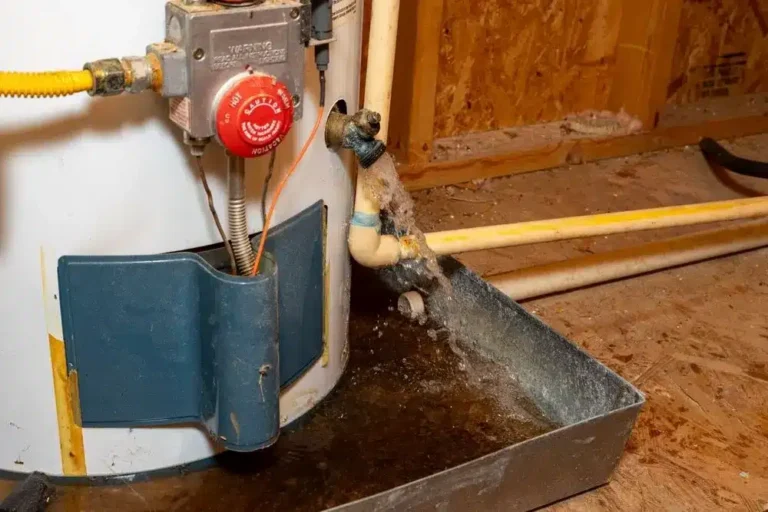
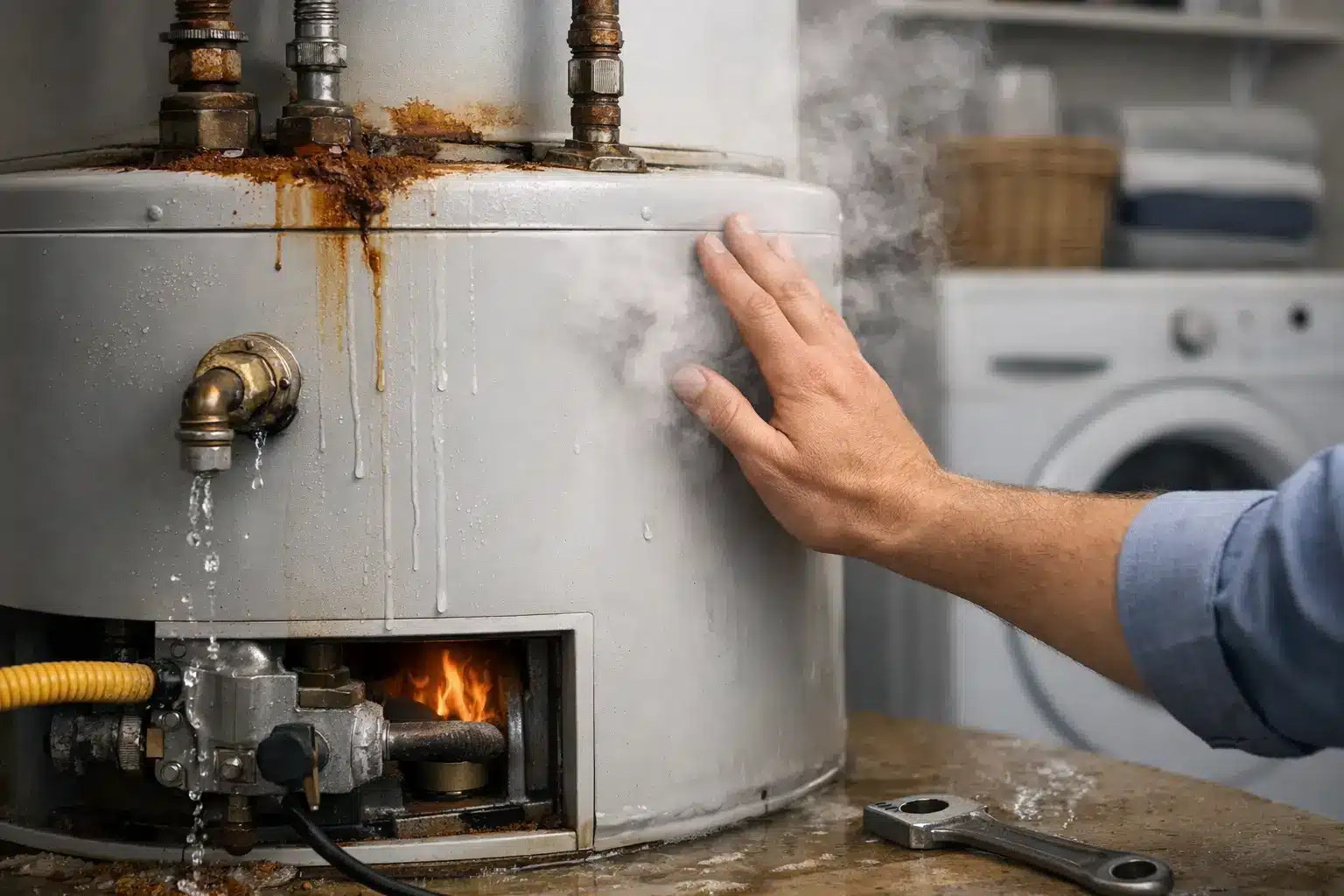
Any moisture around the base of a water heater deserves attention. It could be a loose connection, a leaking valve, condensation, or a crack in the tank itself. The difference matters.
A fitting or valve issue may be repairable. A leaking tank is a different story. Once the tank body itself is compromised, replacement is usually necessary. What looks like a small drip today can become a major leak with very little warning.
There is visible corrosion on the tank or fittings
Rust on pipes, connections, or the outside of the tank can be an early indicator that moisture has been present for a while. Corrosion does not always mean the tank is already failing internally, but it often means the system needs prompt attention.
The location of the rust matters. Corrosion on a fitting may be isolated. Corrosion on the tank body is more serious, especially if paired with discolored water or active leaking.
The pressure relief valve is dripping or acting up
The temperature and pressure relief valve is an important safety component. If it is leaking, discharging water, or showing signs of wear, do not ignore it. Sometimes the valve itself is faulty. Sometimes it is reacting to excessive pressure or temperature inside the tank.
Either way, this is not a wait-and-see situation. Safety components should be inspected quickly by a trained technician.
Age still matters, even if the heater seems to work
A water heater can still produce hot water and still be close to failure. Most tank water heaters have a general life expectancy in the range of 8 to 12 years, though that varies based on water quality, maintenance, installation quality, and usage.
If your unit is in that age range and showing even one or two of these issues, it is wise to take them seriously. An older system has less margin for error. A newer unit with one isolated symptom may have a straightforward repair. An aging unit with multiple symptoms often tells a different story.
If you are not sure how old the system is, check the serial number label on the tank. A technician can usually confirm the age and help you understand whether repair or replacement makes more sense.
When repair may work and when replacement is more likely
Not every water heater problem means the whole unit is done. A bad thermostat, heating element, valve, or burner component may be fixable. If the tank itself is intact and the unit is relatively young, repair can often restore reliable performance.
But some signs suggest the water heater is beyond a simple fix. Tank leaks, repeated loss of hot water, internal corrosion, and widespread sediment issues on an older unit usually point toward replacement. The right answer depends on the condition of the tank, the severity of the problem, and how dependable the unit needs to be for your household or facility.
For homeowners, the biggest concern is often avoiding an unexpected failure at the worst possible time. For property managers and commercial operators, downtime can affect tenants, staff, customers, and daily operations. In both cases, acting early gives you more control over the next step.
What to do if you notice these warning signs
Start by paying attention to patterns. One odd noise or one lukewarm shower might not mean much on its own. But if you are seeing multiple issues together, the system needs professional attention.
Do not ignore active leaking, rusty hot water, strong odor, or a pressure relief valve issue. Those symptoms deserve prompt service. If the unit is making unusual noises or struggling to keep up, scheduling an inspection now can help prevent a full breakdown later.
For homes and businesses in the Lexington area, working with a certified local team matters because water heater problems are rarely one-size-fits-all. Fuel type, water quality, fixture demand, tank age, and building use all affect the right solution. Kay Plumbing, Heating & Cooling helps customers identify the real problem, protect the property, and restore reliable hot water with the kind of response people count on when comfort and function are on the line.
A water heater does not need to fail completely before it deserves attention. If something feels off, it usually is, and catching it early is the best way to protect your hot water and your peace of mind.