Why Is My Faucet Leaking? Common Causes
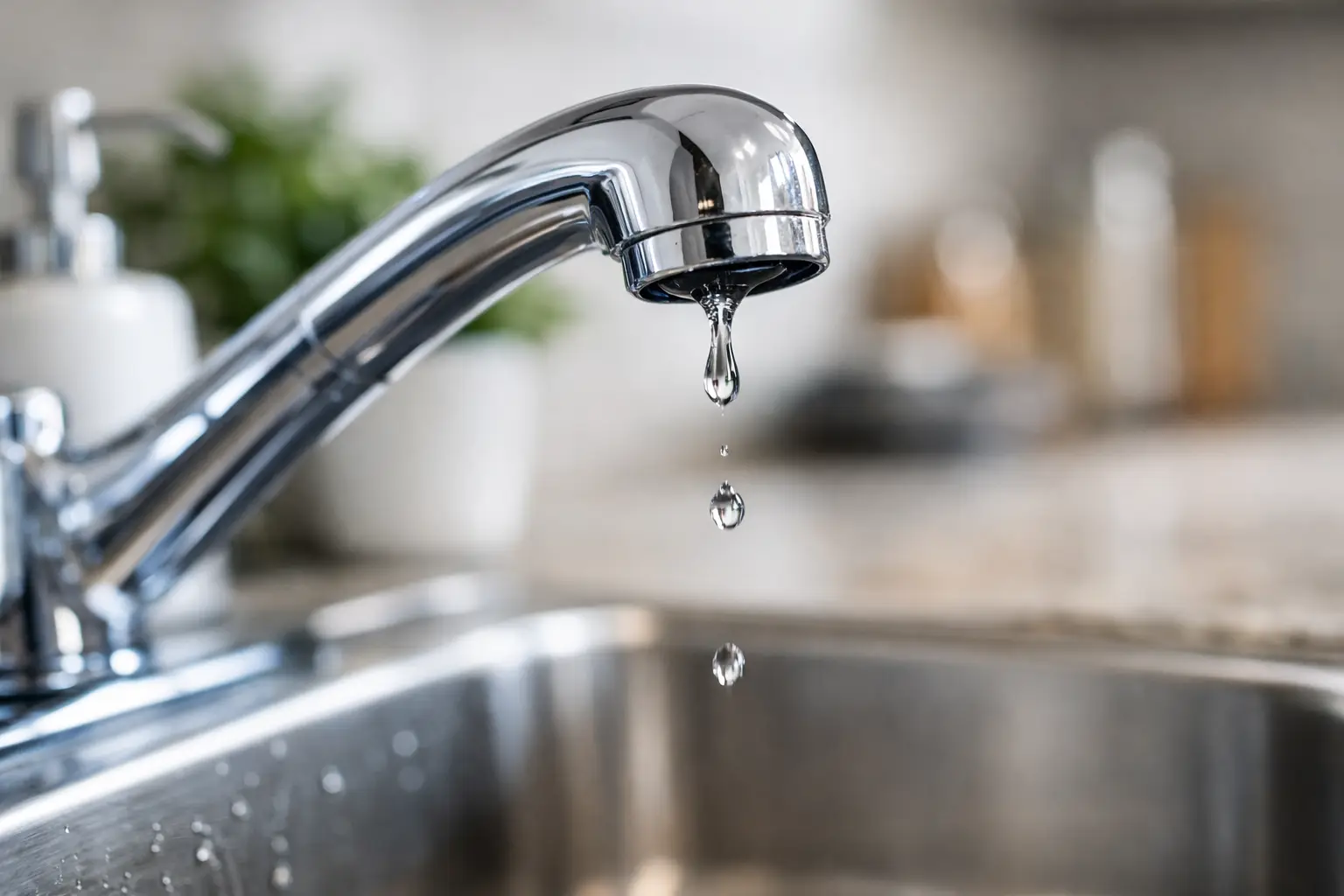
A faucet that drips once every few seconds can be easy to ignore – until the sound starts keeping you up at night or you notice water collecting around the base. If you’re asking, “why is my faucet leaking,” the answer usually comes down to wear, pressure, or a part that is no longer sealing the way it should.
The good news is that a leaking faucet is often a fixable problem. The less good news is that the source is not always obvious from where the water shows up. A drip from the spout points to one kind of issue. Water around the handle, under the sink, or at the base of the faucet can point to something else entirely.
Why is my faucet leaking from the spout?
When water continues to drip from the end of the faucet after you shut it off, the most common problem is a worn internal component. In many faucets, that means a washer, O-ring, cartridge, ceramic disc, or valve seat has started to break down.
Compression faucets, which are more common in older homes, often leak because the rubber washer has worn out. Every time the handle is turned, that washer presses down to stop the flow of water. Over time, rubber hardens, cracks, or flattens. Once that seal weakens, a drip begins.
In newer faucets, especially single-handle models, the cartridge is often the culprit. Cartridges control both water flow and temperature, and when they wear down or become clogged with mineral buildup, the faucet may not shut off completely. A ceramic disc faucet can also leak if debris gets between the discs or if the seals around the assembly fail.
Sometimes the issue is not the main shutoff mechanism but the valve seat, which connects the faucet to the spout assembly. Corrosion or sediment can rough up that surface enough to prevent a clean seal. That is especially common in areas where water carries more mineral content.
Why is my faucet leaking around the handle or base?
A leak near the handle usually means water is escaping before it ever reaches the spout. That often points to a damaged O-ring, loose packing nut, worn cartridge seal, or cracked internal body part.
If the base of the faucet is wet, the leak may be coming from seals around the body of the fixture. On a kitchen faucet with a swivel spout, the seals inside that moving section can wear out from repeated use. In a bathroom faucet, buildup and age can slowly degrade the gaskets that keep water contained.
Not every base leak is truly a faucet-body problem, though. Water can run along the sink deck from a splash, a loose escutcheon, or even a slow supply line leak under the sink, then show up around the faucet. That is why it helps to dry everything thoroughly and watch where the first bead of water appears.
The role of water pressure in a leaking faucet
Homeowners are often surprised to learn that the faucet itself may not be the only problem. High water pressure can make a faucet drip even when the internal parts are only slightly worn.
If the drip seems worse at certain times of day, pressure changes could be involved. In some homes, pressure rises overnight or when overall neighborhood demand shifts. That extra force can push water past seals that would otherwise hold.
Pressure-related leaks are a good example of why a faucet repair is not always as simple as replacing one small part. If the fixture is already under stress from high pressure, the leak may return unless the bigger issue is addressed.
Mineral buildup can make a good faucet act like a bad one
South Carolina homes can deal with mineral deposits that affect plumbing fixtures over time. Even when the faucet is mechanically sound, scale and sediment can interfere with smooth operation.
Mineral buildup can prevent cartridges from seating properly, rough up internal surfaces, and block small passages that help regulate flow. You might notice a handle that feels stiff, inconsistent water flow, or a drip that starts gradually and gets worse.
This is one reason two faucets of the same age can wear very differently. A fixture in a lightly used guest bathroom may last much longer than one in a busy kitchen where it is opened, closed, and splashed all day.
What you can check before calling for faucet repair
If you are comfortable doing a little inspection, there are a few basic things you can look at safely. Start by identifying where the water is coming from. Is it dripping from the spout, collecting around the handle, pooling at the base, or showing up inside the cabinet below?
Next, check whether the leak happens all the time or only while the faucet is running. A constant drip usually points to an internal shutoff problem. A leak that appears only during use may be tied to seals, connections, or the faucet body.
Look under the sink with a flashlight. Supply line connections, shutoff valves, and drain parts can all create moisture that looks like a faucet leak from above. If everything under the sink is dry, that helps narrow the issue back to the fixture itself.
It also helps to notice the faucet style. A two-handle compression faucet, a cartridge faucet, a ball faucet, and a ceramic disc faucet all fail in different ways. That matters if you are trying to decide whether the repair is simple or likely to require replacement parts and a more detailed diagnosis.
When a faucet leak is more than a minor annoyance
A small drip may not feel urgent, but leaks have a way of causing more trouble than expected. Water around the base of a faucet can stain countertops, seep into cabinets, and support mold growth in hidden areas. A slow leak under the sink can damage wood, loosen laminate, and create conditions for bigger plumbing repairs later.
For commercial spaces or rental properties, a leaking faucet can become a maintenance issue fast. Restrooms, breakrooms, and tenant spaces see steady use, and a fixture that starts leaking can turn into a disruption if it worsens suddenly.
There is also the practical side. A faucet that drips constantly is usually telling you that a seal has failed, a component is wearing down, or pressure is stressing the fixture. Those problems rarely correct themselves.
Why is my faucet leaking even after I tightened it?
This is a common frustration. Tightening the handle or nearby hardware may stop movement, but it will not fix a worn sealing surface inside the faucet. If the washer, cartridge, or O-ring has already deteriorated, tightening external parts can only do so much.
In some cases, overtightening actually makes things worse. Older compression faucets are especially prone to damage when handles are cranked down too hard. That extra force can wear the washer faster or strain threads and stems.
If the leak returns right after a quick adjustment, the faucet likely needs more than a simple tightening. It needs the failing part identified and corrected.
When to repair the faucet and when to replace it
This depends on the age of the fixture, the type of faucet, and the condition of the internal parts. A relatively new faucet with a worn cartridge or O-ring is often a good repair candidate. If the body is in good shape and replacement parts are available, a targeted repair can restore normal performance.
Replacement becomes more likely when the faucet is older, heavily corroded, repeatedly leaking, or difficult to service because parts are obsolete. Cracks in the body, recurring leaks from multiple points, or loose mounting hardware can also make replacement the smarter long-term move.
For many homeowners and property managers, the real question is not just whether a repair is possible. It is whether the repair will hold and whether the fixture is worth continued effort.
When it makes sense to call a professional
If the leak source is unclear, if water is reaching cabinetry or walls, or if the faucet is part of a larger plumbing issue, it is time to bring in a licensed plumber. The same goes for commercial fixtures, specialty faucets, or any situation where repeated DIY attempts have not solved the problem.
A professional can determine whether the issue is the faucet, the pressure, the supply connections, or a hidden leak nearby. That saves time and helps prevent a small drip from turning into water damage.
At Kay Plumbing, Heating & Cooling, we see this often: a customer assumes the faucet is worn out, but the real issue is a failing seal, a damaged connection, or pressure affecting the whole system. A clear diagnosis makes all the difference.
A leaking faucet is your plumbing’s way of asking for attention. The sooner you address it, the easier it is to protect your sink, your cabinets, and your peace and quiet.